
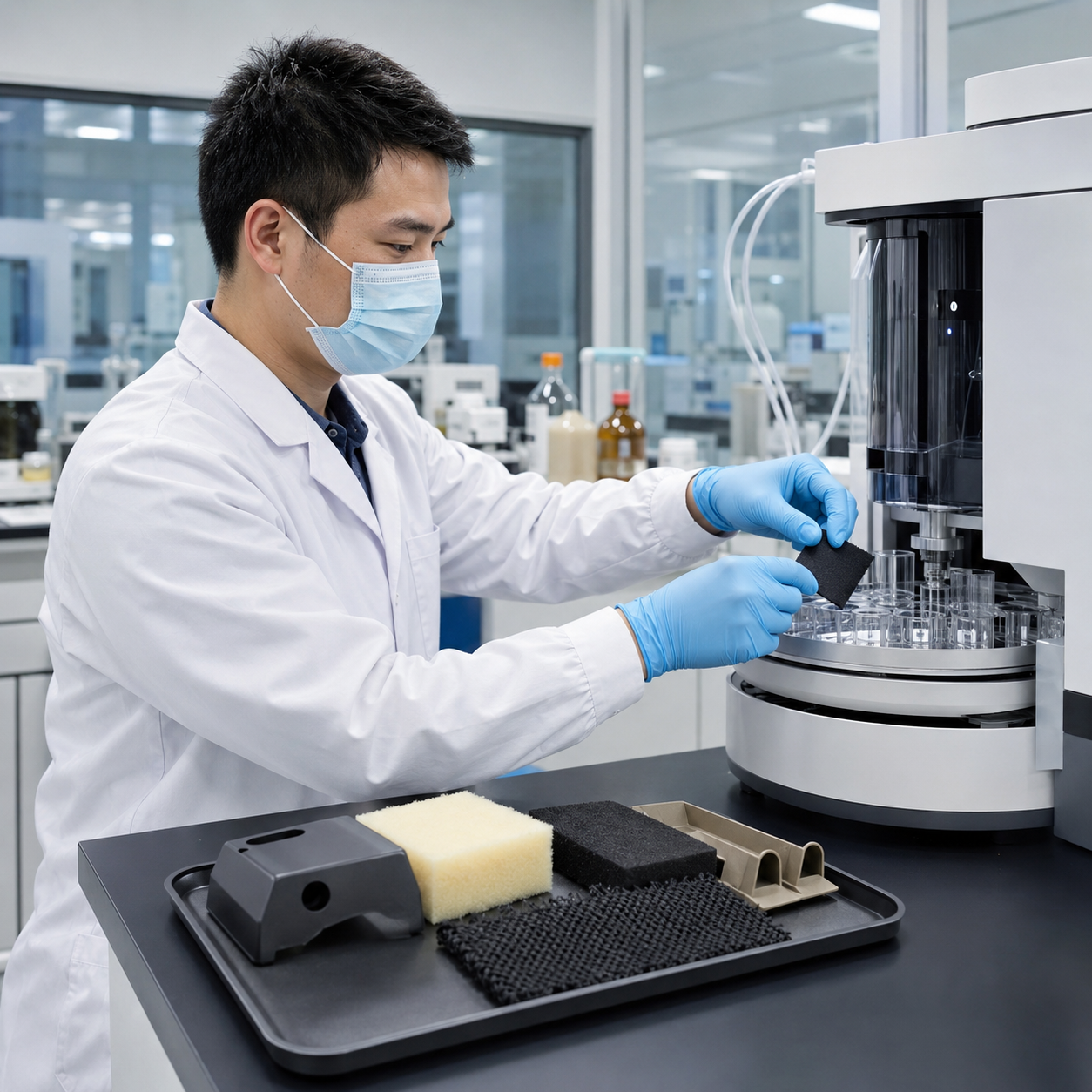
VOC Test for Automotive Interior Materials and Cabin Air Quality
Materials inside a vehicle can release volatile compounds when exposed to heat. Plastics, foam, fabrics, coatings, adhesives, and sealants may all contribute to odour, windscreen deposits, or changes in cabin air quality.
A VOC test measures emissions from automotive materials under controlled conditions. The results help manufacturers compare materials, qualify suppliers, investigate unusual odours, and evaluate compliance with customer or OEM requirements.
What Is a VOC Test?
VOC refers to volatile organic compounds that evaporate from materials; testing measures emissions from automotive parts under controlled conditions.
- Material development
- Interior component qualification
- Supplier approval
- Production change assessment
- Odour investigation
- Cabin air quality evaluation
- Comparison of alternative materials
- Customer or OEM submission
The test method should be selected according to the required specification. Different procedures may use different temperatures, sampling periods, chambers, and analytical techniques.
Automotive Materials Commonly Evaluated
Many non-metallic interior vehicle materials can affect emission levels; testing parts helps identify sources of elevated results.
| Automotive Material | Possible Testing Purpose |
| Instrument panels | Evaluate emissions from plastics, coatings, and foam |
| Seat foam and covers | Check compounds released from foam, fabric, or leather |
| Door trim panels | Assess plastics, adhesives, and decorative layers |
| Headliners | Evaluate textile, foam, glue, and backing materials |
| Floor carpets | Check fibres, backing compounds, and bonding materials |
| Adhesives and sealants | Measure emissions from assembly chemicals |
| Steering wheel materials | Evaluate polymers, coatings, and surface treatments |
| Insulation materials | Assess foam and sound-absorbing components |
A single interior component may contain several layers and materials. Testing the finished part can show its combined emission level, while testing separate layers may help identify the main source.
Main Types of VOC and Emissions Testing
Automotive manufacturers may need more than one test because volatile compounds, formaldehyde, and fogging involve different analytical objectives.
VDA 278 Testing
VDA 278 uses thermal desorption and gas chromatography-mass spectrometry to evaluate organic emissions from non-metallic automotive materials.
The method can provide information about volatile compounds and higher-boiling substances associated with fogging. It is commonly applied to plastics, trim, adhesives, foam, and other interior materials.
ISO 12219 Testing
The ISO 12219 series covers the evaluation of volatile compounds in vehicle interiors and emissions from individual components or materials.
Depending on the selected section, testing may involve chambers, bags, or other controlled sampling systems. The required procedure should follow the customer or OEM specification.
Formaldehyde Testing
Formaldehyde may require a dedicated method because it is not always evaluated through the same procedure as general VOC emissions.
Testing may be applied to textiles, foam, plastics, adhesives, and composite interior materials. Results can be compared with limits defined by a customer or product specification.
Fogging Testing
Fogging occurs when semi-volatile substances evaporate from interior materials and later condense on cooler surfaces such as the windscreen.
Fogging analysis may evaluate deposited mass or changes in light reflectance. It supports the assessment of driver visibility, interior cleanliness, and material emission behaviour.
Why Automotive Manufacturers Use VOC Testing
VOC testing supports decisions before full production by revealing emission differences across materials, suppliers, batches, and processes.
- Select lower-emission materials
- Compare approved and alternative suppliers
- Investigate strong or unusual cabin odours
- Evaluate the effect of formulation changes
- Monitor consistency between production batches
- Support interior material qualification
- Check customer or OEM requirements
- Investigate windscreen fogging
- Improve material storage and curing conditions
For example, two adhesives may bond similarly but emit different compounds when heated, so VOC testing helps compare emissions before selection.
Planning Samples and Interpreting Results
Useful results start with a clear testing objective, ensuring the lab understands needs like qualification, comparison, odour checks, or standard compliance.
- Material name and intended application
- Component location inside the vehicle
- Customer or OEM test method
- Required sample quantity and dimensions
- Production date and batch number
- Storage and packaging conditions
- Curing or conditioning history
- Suspected odour or emission issue
- Normal comparison samples
- Required reporting limits
Samples should be stored in clean packaging to prevent contamination or loss of volatile compounds, and results must be compared with proper specifications.
VOC Testing Services in Malaysia
Malaysia’s automotive supply chain includes manufacturers of interior trim, plastics, foam, adhesives, textiles, electronics, and assembled components that require emissions data for product development, customer approval, and quality control, while Alstesting VOC testing services in Malaysia support evaluation of interior materials, component emissions, formaldehyde, and fogging behaviour to help manufacturers obtain reliable data for material selection, supplier comparison, process improvement, and compliance with interior quality requirements.